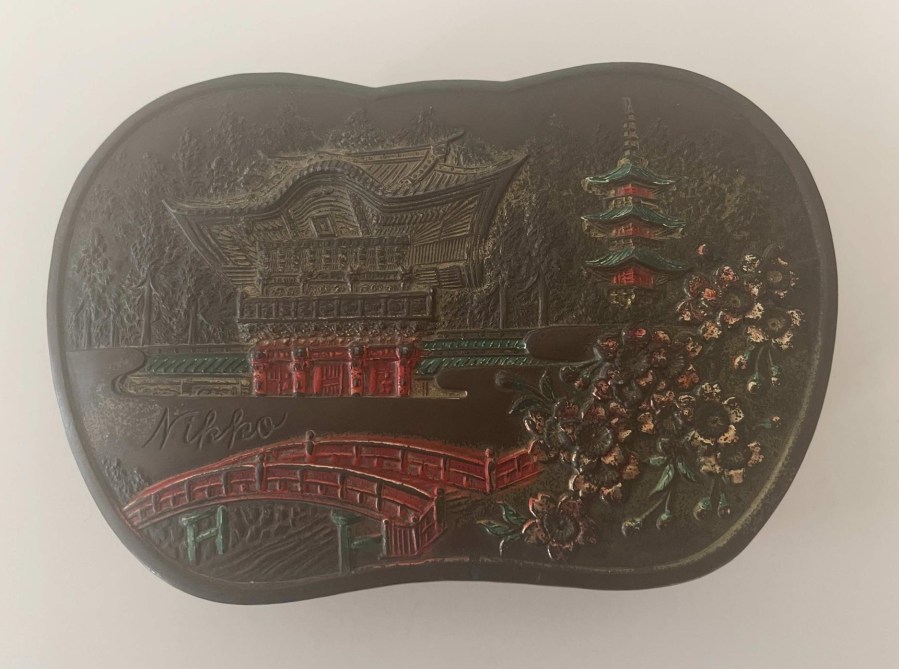
My father brought my mother a metallic trinket box home to New Zealand from Japan sometime between 1945 and 1948. He’d been in Japan for a while, before they married, as part of the Western occupation forces after World War 2. He once told me he got his call-up papers two days after the war ended, so he was lucky to miss out on being deployed to fight. He had three older brothers, two of whom who were called up, but I don’t know anything about their stories, except that none were killed. However, my father didn’t see any fighting, but got deployed to occupied Japan instead.
The trinket box sat in a cabinet in my childhood home, along with a few other precious items. We kids would poke around in there from time to time to fiddle with them, and naturally they suffered a few casualties. At some stage during its lifetime, the lid of the trinket box parted company with the body of it and developed a slight twist. However, they remained together, despite not being joined together, and I eventually inherited the trinket box after mum died.
Ever since that time 6.5 years ago, I’d been meaning to get it repaired. Finally, I did. A friend told me to take it to Harding’s Jewellers, a small artisan business run out of an old house, which it shares with a second-hand shop. Harding’s Jewellers has been a family business for 45 years, and designs, manufactures, and repairs jewellery – and trinket boxes. It’s a real pleasure to still have a small business like this thriving. Long may it do so.

Not knowing anything about maintaining old items, I asked Harding’s if they could polish up the trinket box a bit, as well as fix the lid. Restoring bit of shine to it wouldn’t go amiss, I reckoned. I was gently told that doing so would ruin the patina it had developed over the last 80-ish years. My request made it no further.
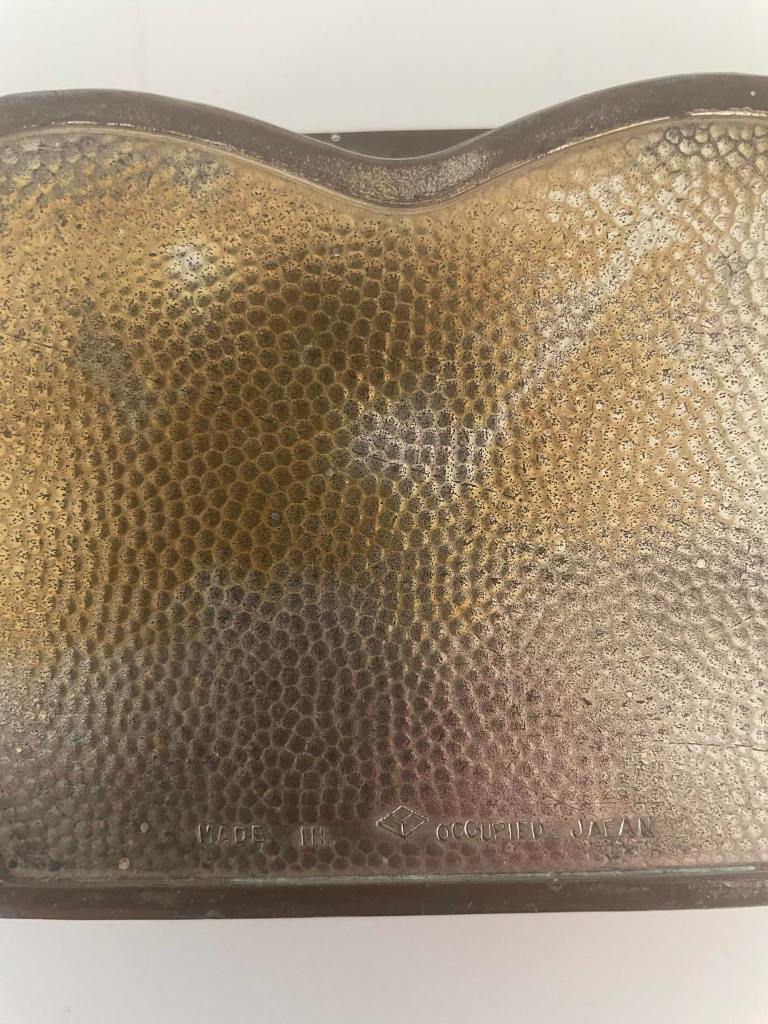
The trinket box is special because of its familial history, but it’s also unique in that the back of it is stamped with “MADE IN OCCUPIED JAPAN”. From what I can ascertain, items manufactured for a brief time between 1945 and 1952 had this stamped on them as a simple means of identification for US import authorities. Theses items have since become collectible, although I don’t believe valuable.
I can’t remember if there were once brighter colours on the box, or not, but I’m happy to have finally got around to having it repaired, and will in due course pass it onto a younger member of the family.
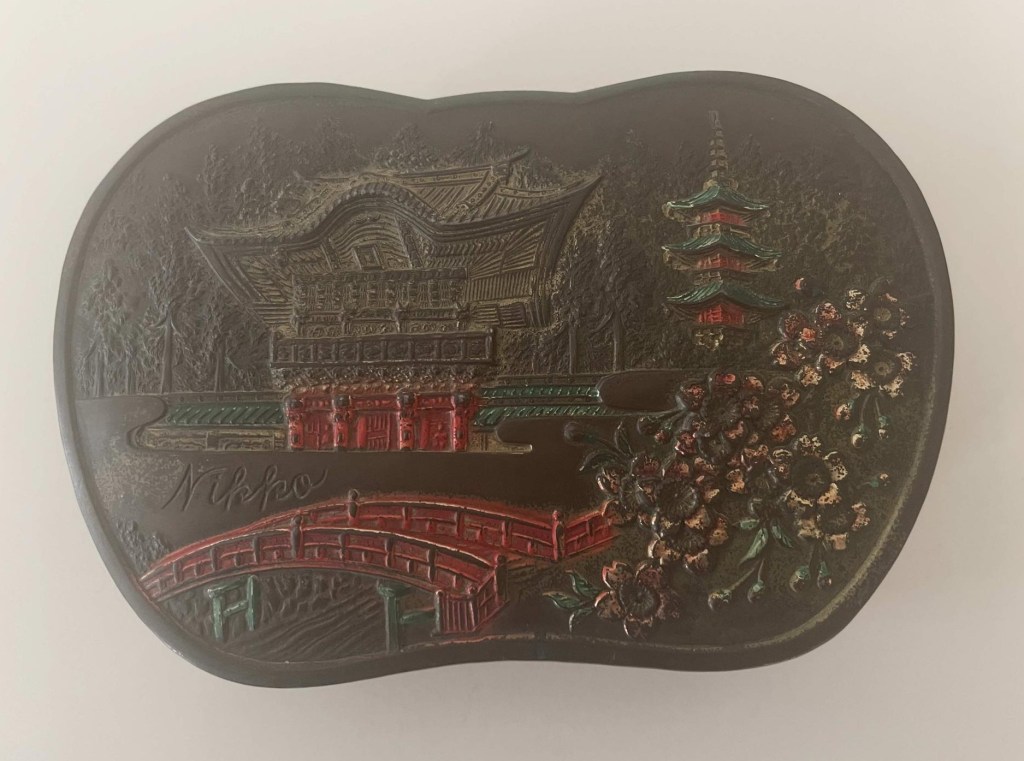
The Nikko signature on the lid appears to be the name of the Japanese manufacturer.
NB: A reader has since made this comment about Nikko – “The picture on the lid is of the town Nikko, not far from Tokyo; a lovely little town in the mountains. The three monkeys of “speak no evil, hear no evil, see no evil” are carved on the main temple in Nikko, probably the one shown on the lid.”
Thank you 🙂
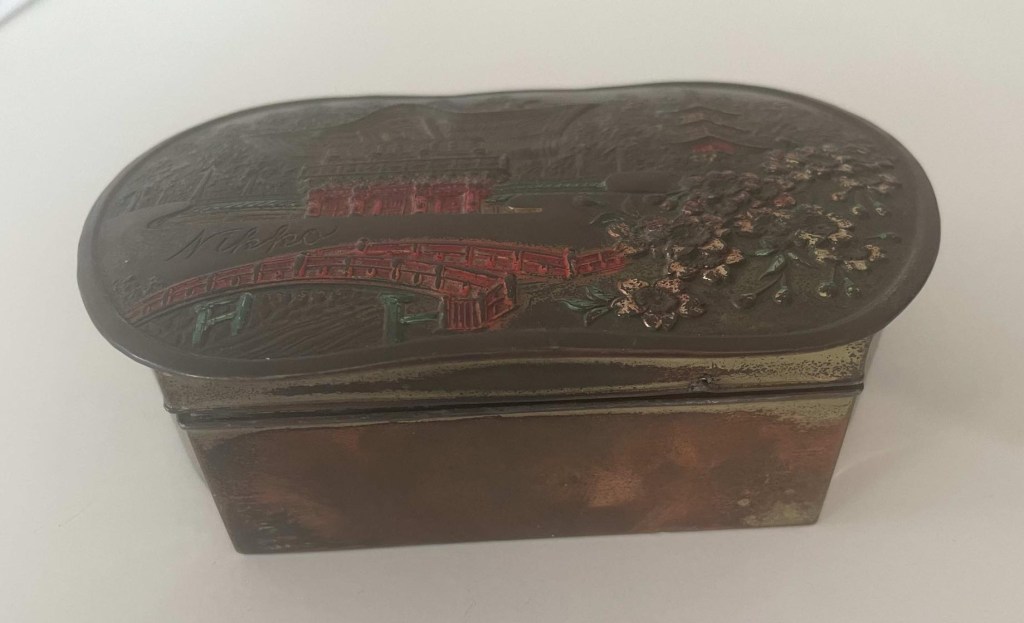
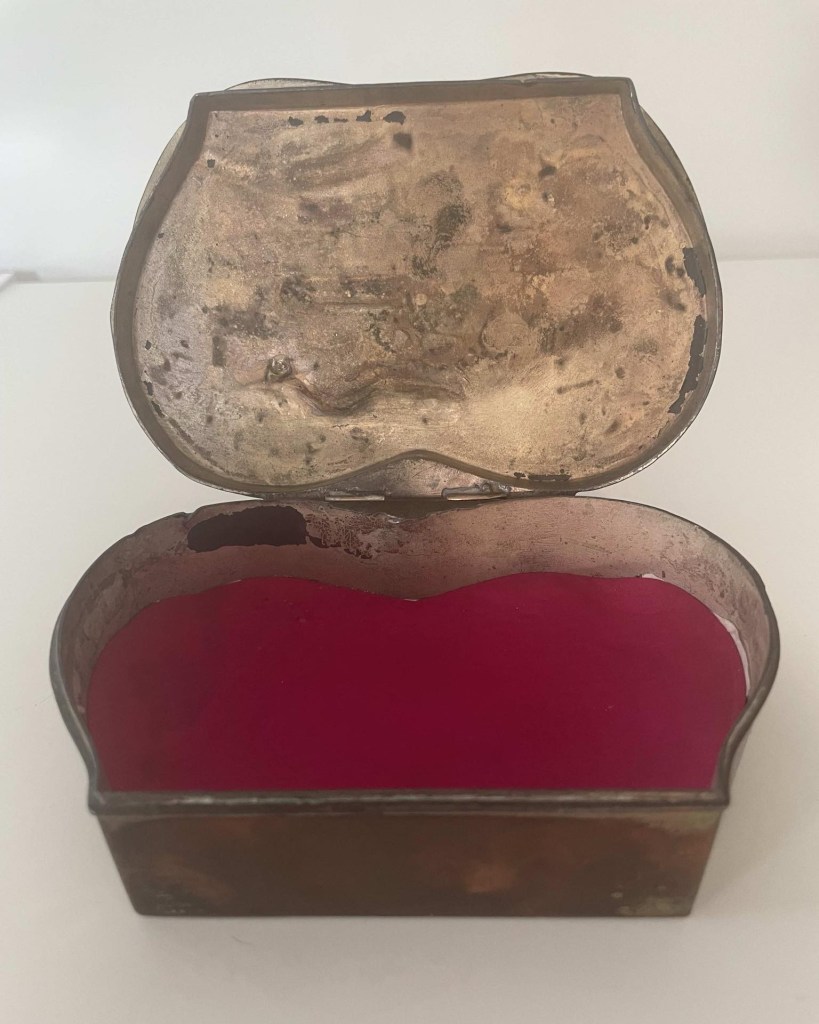
The inside isn’t flash, and I can’t remember if it was ever lined with more than only the base lining, which is the original. The “MADE IN OCCUPIED JAPAN” stamp is just visible on the bottom of the box.
Although I couldn’t be bothered taking much notice of my parents’ stories or their treasures as a younger woman, as I get older I understand how holding onto some family memorabilia is important. Whether we realise it or not, like it or not, take much notice or not, they represent our history and the fact we have a foundation of sorts. True, that foundation can be mighty complex, and some may reject theirs, but it’s what we launch ourselves into the world from, whether it’s shaky or strong. I believe we humans have an instinctive desire to know it’s there, irrespective of how we feel about it, or whether we spend our lives wandering or living far away from where we were born.
 A B'Old Woman
How interesting, Katrina! I never knew that they had such a stamp, although it makes sense as Japan was under American governance, much the same as Germany was immediately after the war. The picture on the lid is of the town Nikko, not far from Tokyo; a lovely little town in the mountains. The three monkeys of “speak no evil, hear no evil, see no evil” are carved on the main temple in Nikko, probably the one shown on the lid.
LikeLike
Oh – thank you so much for that piece of info about Nikko – I shall add it to my blogpiece 🙂
LikeLike
I’ve also had excellent service from Hardings Jewellers over many years. Your trinket box is definitely worth preservation.
LikeLiked by 1 person
I had a couple of condiment saucers and a little teacup marked with the “Made in Occupied Japan” stamp underneath. I bought them at various sales for pennies, so I guess there wasn’t much value to them. (They were chipped, granted, which greatly lowers the value of china pieces.) I lost them during my many moves, though funny enough, a little ceramic planter shaped like a donkey pulling a cart, somehow appeared in my collection. It has the “occupied Japan” stamp on it, so I wonder if some ghostly relative slipped it into my box of knickknacks. Anyway, it’s nice you found a place that was able to repair your mother’s little box. Did they say what sort of metal it’s made from? Tin and aluminum were common materials back then, though someone told me you can occasionally find pieces made from melted down guns and other armaments. I’m guessing not for your piece, since it’s a souvenir from a temple…!
Interesting post! I love antiques and odd bits of history. I hope your box brings you joy as well as fond memories of your parents.
LikeLiked by 1 person
Thank you. If I was to make a guess, I’d say the box is made from tin. Now that I’ve had it repaired, and know a little more about it, I feel even more intrigued and attached to it 🙂
LikeLiked by 1 person